
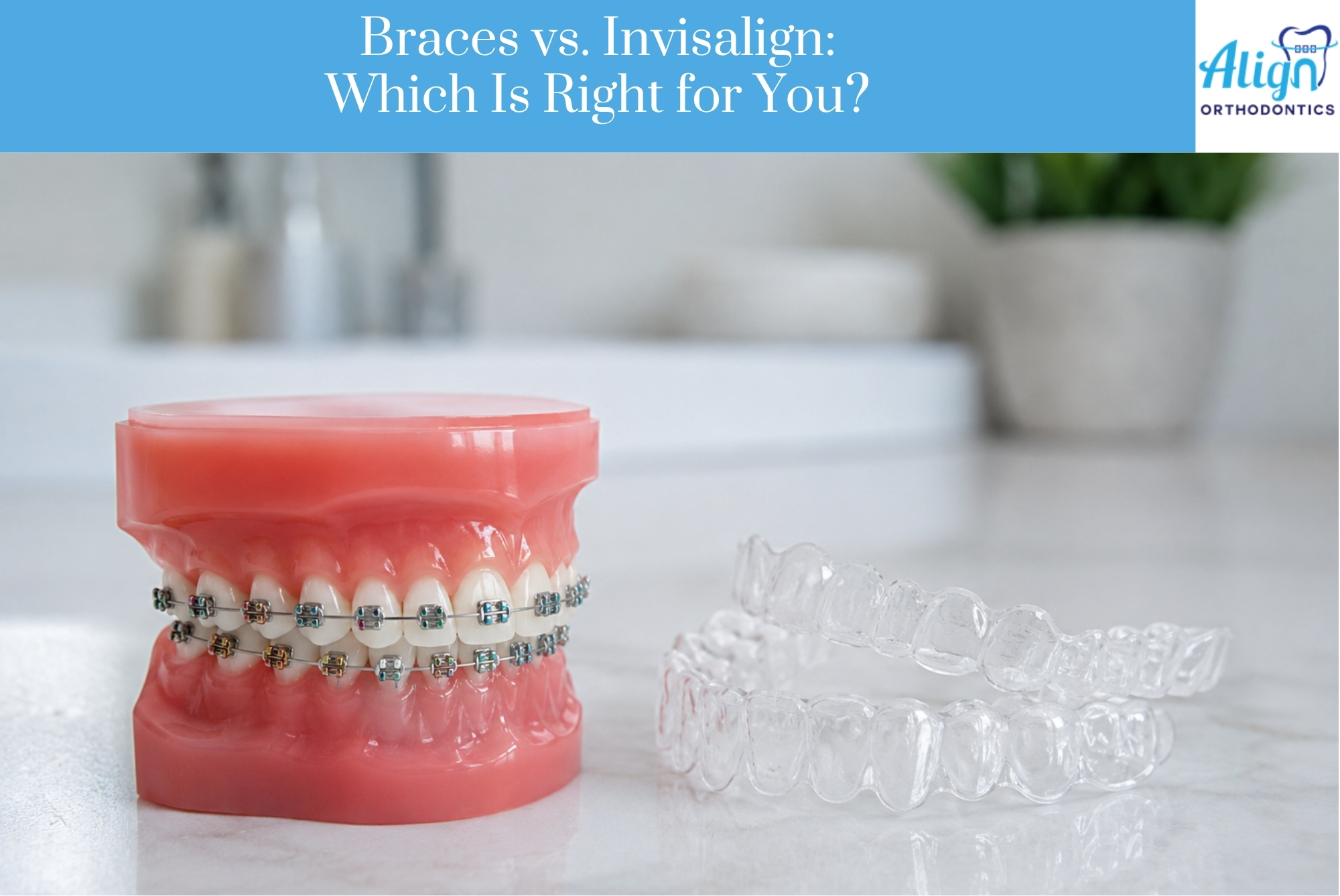
 Choosing orthodontic treatment is an important decision that can affect your smile, oral health, comfort, and confidence for years to come. Two of the most common orthodontic treatment options are traditional braces and Invisalign clear aligners. Both can effectively straighten teeth and correct many bite problems, but they work differently and may be better suited to different orthodontic needs and lifestyles.
At Align Orthodontics Lexington, patients can receive an individualized orthodontic evaluation to determine which treatment approach is appropriate for their teeth, bite, goals, and daily routine. If you are comparing braces vs. Invisalign in Lexington, MA, understanding the advantages and considerations of each option can help you prepare for a productive conversation with your orthodontist.
What Are Traditional Braces?
Traditional braces use brackets attached to the teeth and an orthodontic wire to gradually guide teeth toward their planned positions. The orthodontist periodically adjusts the appliance as treatment progresses.
Modern braces are more advanced than many people remember from previous generations. Although braces remain visible, today’s orthodontic appliances are designed to provide precise, controlled tooth movement while treating a broad range of alignment and bite concerns.
Because braces remain attached to the teeth throughout active treatment, patients do not have to remember to insert or remove their appliance each day.
What Is Invisalign?
Invisalign is an orthodontic treatment system that uses a planned series of removable, clear aligners. Each aligner applies controlled forces that progressively move teeth toward their desired positions.
The aligners are designed to fit closely over the teeth, making them considerably less noticeable than conventional metal braces. Patients generally progress through a sequence of aligners according to their orthodontist’s instructions.
Invisalign’s removable design can make eating, brushing, and flossing more convenient, but successful treatment requires consistent wear and patient cooperation.
Braces vs. Invisalign: What Is the Main Difference?
The most obvious difference is that braces are fixed orthodontic appliances, while Invisalign aligners are removable.
Braces use brackets and wires that stay on the teeth throughout treatment. Invisalign uses clear aligner trays that patients remove for activities such as eating and oral hygiene.
However, appearance is only one consideration. Treatment selection can also depend on the complexity of tooth movement required, bite correction, patient age and development, lifestyle, oral hygiene habits, and the ability to follow treatment instructions consistently.
Which Option Is Better for Complex Orthodontic Problems?
Both braces and clear aligners can address many orthodontic concerns. The appropriate treatment depends on the specific diagnosis and the tooth movements required.
Braces provide orthodontists with extensive control over tooth movement and can be particularly useful when treating complex alignment, bite, or positioning problems. Invisalign technology has also evolved significantly and may be appropriate for cases ranging from relatively straightforward alignment to more involved orthodontic treatment.
It is therefore inaccurate to assume that Invisalign is only for minor cosmetic concerns or that braces are automatically required for every complex case. A clinical orthodontic evaluation is necessary to determine what can predictably address an individual patient’s needs.
Which Treatment Is More Discreet?
For patients who prioritize a less noticeable orthodontic appliance, Invisalign often has an advantage. Clear aligners are designed to be subtle when worn.
Traditional braces are more visible because the brackets and wires remain attached to the teeth. For many children and teenagers, however, braces can also provide opportunities for personalization through colored elastics.
Adults and teens who frequently attend professional, academic, or social events may particularly appreciate the discreet appearance of clear aligners.
Which Is More Comfortable: Braces or Invisalign?
Both treatments apply pressure to move teeth, so some temporary tenderness or pressure can occur with either option, especially after adjustments or when beginning a new aligner.
Invisalign aligners have smooth surfaces and do not use traditional brackets or wires. Some patients therefore prefer how aligners feel against their cheeks and lips.
Braces may occasionally cause irritation as the mouth adjusts to brackets and wires. Orthodontic wax and other recommendations from the orthodontic team can often help manage minor irritation.
Comfort varies considerably between patients, so it should be considered alongside effectiveness rather than being the only factor when selecting treatment.
Eating With Braces vs. Invisalign
Eating habits are one of the most significant lifestyle differences between the two treatments.
Patients with braces typically need to avoid or modify foods that could damage brackets and wires. Very hard, sticky, or chewy foods can create problems with orthodontic appliances and may require additional appointments for repairs.
Invisalign aligners are normally removed for meals, allowing patients to continue eating a wider variety of foods. Patients should follow their orthodontist’s instructions about removing aligners and maintaining good oral hygiene before putting them back in.
For people who want fewer dietary restrictions during orthodontic treatment, removable aligners may be appealing.
Oral Hygiene With Braces
Excellent oral hygiene is essential throughout orthodontic treatment.
With braces, food particles and plaque can collect around brackets and underneath wires. Patients need to brush carefully around the orthodontic hardware and use appropriate techniques or cleaning aids to clean between the teeth.
Consistent oral hygiene helps protect the teeth and gums while orthodontic movement is taking place.
Oral Hygiene With Invisalign
Because Invisalign aligners are removable, patients can generally brush and floss without brackets or wires interfering with their normal technique.
The aligners themselves also need appropriate care. Teeth should be kept clean before aligners are reinserted, and patients should follow their orthodontist’s recommendations for cleaning their trays.
The convenience of removable aligners does not eliminate the need for excellent dental hygiene. It simply changes how patients manage it.
Invisalign Requires Consistent Wear
Removability is one of Invisalign’s greatest conveniences, but it also creates an important responsibility.
Clear aligners only work as planned when they are worn according to the prescribed schedule. Frequently leaving them out can interfere with planned tooth movement and potentially affect treatment progress.
Patients who are confident that they can consistently follow their orthodontist’s wear instructions may be strong candidates for Invisalign.
For patients who are likely to lose aligners or frequently forget to wear them, fixed braces may offer a practical advantage.
Braces Do Not Depend on Remembering to Wear Them
Because braces are attached to the teeth, they continue working without the patient having to remember to put an appliance back in after meals or brushing.
Patients still have important responsibilities, including keeping their teeth clean, following food recommendations, attending appointments, and using any additional orthodontic appliances as directed.
However, the primary braces system itself cannot simply be forgotten at home or left out for several hours.
Are Braces Better for Children and Teenagers?
Braces have long been a common treatment option for children and teenagers, but age alone does not determine the best orthodontic appliance.
A child’s stage of dental and facial development, orthodontic diagnosis, treatment requirements, oral hygiene, and ability to follow instructions can all influence treatment planning.
Some teenagers may be excellent Invisalign candidates, while others may benefit more from braces. An orthodontic consultation allows these factors to be evaluated individually.
Is Invisalign Good for Adults?
Invisalign can be an attractive option for adults who want to improve their smile while maintaining a discreet appearance during treatment.
Adults may choose clear aligners because they can be less noticeable during work, meetings, presentations, photographs, and social occasions. Removability can also make normal brushing and flossing easier.
However, adults should not assume that Invisalign is automatically their best option. Orthodontic health, tooth movement requirements, existing dental work, gum health, and other clinical considerations need to be assessed before treatment begins.
How Long Do Braces and Invisalign Take?
There is no universal treatment timeline for braces or Invisalign.
Orthodontic treatment duration can vary based on factors such as the severity of crowding or spacing, bite relationships, required tooth movements, patient growth, biological response to treatment, appliance choice, missed appointments, broken appliances, and compliance with instructions.
A relatively straightforward case may require less time than a complex bite correction regardless of which appliance is selected.
After evaluating your teeth and bite, your orthodontist can provide a treatment plan and estimated timeline based on your individual situation.
Is Invisalign Faster Than Braces?
Not necessarily.
Invisalign advertisements and online discussions can sometimes create the impression that clear aligners are inherently faster than braces. In practice, treatment time depends substantially on the orthodontic problem being corrected and how the patient responds to treatment.
Invisalign treatment can also depend heavily on consistent aligner wear. Failing to wear aligners as directed may interfere with progress.
The better question is not simply which appliance is faster, but which treatment method can efficiently and predictably accomplish the necessary orthodontic movements for your individual case.
How Much Do Braces and Invisalign Cost?
The cost of orthodontic treatment varies according to the treatment plan, complexity, expected duration, appliance type, and other factors specific to the patient and orthodontic practice.
Instead of relying on generalized online price estimates, patients should request an individualized treatment and financial consultation. This provides a more useful understanding of anticipated costs and available payment or insurance considerations.
Contact Align Orthodontics Lexington for current information regarding treatment costs, payment options, and applicable insurance policies.
Do Braces or Invisalign Produce Better Results?
Neither appliance should automatically be considered the universal winner.
Excellent orthodontic outcomes depend on accurate diagnosis, thoughtful treatment planning, appropriate appliance selection, professional supervision, and patient cooperation.
Braces may provide advantages for particular tooth movements or complex orthodontic situations. Invisalign may provide excellent results for appropriately selected patients while offering the convenience of a removable and discreet appliance.
The best treatment is the one that appropriately addresses your orthodontic diagnosis and can be used successfully within your lifestyle.
Why Professional Orthodontic Evaluation Matters
Orthodontics involves more than making the front teeth appear straighter. A comprehensive orthodontic assessment can evaluate tooth positions, spacing or crowding, bite relationships, jaw relationships, dental development, and other factors relevant to treatment planning.
Two people who appear to have similar crooked teeth may require very different treatment strategies once their complete bites are evaluated.
This is why choosing between braces and Invisalign should begin with an individualized orthodontic examination rather than relying exclusively on photographs, advertisements, social media, or another person’s treatment experience.
Braces vs. Invisalign Q&A
Are braces better than Invisalign?
Neither option is inherently better for every patient. Braces may provide advantages for certain complex tooth movements and bite corrections, while Invisalign can offer effective orthodontic treatment with a removable, discreet appliance for appropriate candidates. Your orthodontist can recommend an option based on your diagnosis.
Is Invisalign as effective as braces?
Invisalign can be highly effective for appropriately selected orthodontic cases. Effectiveness depends on the patient’s orthodontic needs, treatment planning, and consistent aligner wear. Some cases may be better suited to braces.
Can Invisalign fix an overbite?
Clear aligners may be used as part of treatment for certain overbite problems. However, overbites differ in cause and severity. An orthodontic examination is necessary to determine whether Invisalign, braces, additional appliances, or another approach is appropriate.
Can Invisalign fix an underbite?
Some underbite cases may be treated with clear aligners, while others can require different orthodontic strategies depending on the underlying dental and skeletal relationships. A professional evaluation is essential.
Can Invisalign fix crowded teeth?
Yes, clear aligners can be used to treat many cases involving crowded teeth. The amount and nature of the crowding, available space, bite, and other clinical factors influence whether Invisalign is appropriate.
Can braces fix gaps between teeth?
Braces are commonly used to close spaces between teeth. The orthodontist will also consider why the spacing developed because the underlying cause can influence treatment planning and long-term stability.
Can Invisalign close gaps?
Invisalign can address many spacing problems by progressively moving teeth into planned positions. Suitability depends on the amount of spacing and the patient’s overall bite.
Can teenagers get Invisalign?
Many teenagers can be candidates for Invisalign. Treatment suitability depends on orthodontic needs and the patient’s ability to wear and care for the aligners consistently.
Can adults get braces?
Yes. Orthodontic treatment is not limited to children and teenagers. Many adults receive braces to address alignment and bite concerns.
Am I too old for Invisalign?
There is no single age at which someone automatically becomes too old for clear aligner treatment. Dental and periodontal health and the nature of the orthodontic problem are more important considerations. An orthodontist can determine candidacy after an examination.
Can I eat normally with Invisalign?
Because clear aligners are removable, patients generally remove them when eating and can enjoy many foods that might need to be avoided with braces. Patients should follow their orthodontist’s specific instructions regarding meals, beverages, cleaning, and aligner wear.
What foods should I avoid with braces?
Patients with braces are generally advised to be cautious with hard, sticky, or chewy foods that could damage brackets or wires. Your orthodontic team can provide specific dietary guidance based on your appliance.
Do I have to wear Invisalign all day?
Invisalign treatment requires consistent daily wear according to the orthodontist’s instructions, with aligners typically removed for eating, drinking certain beverages, brushing, and flossing. Follow the wear schedule prescribed specifically for your treatment.
Can I take Invisalign out for an important event?
Clear aligners are removable, but leaving them out for extended periods may interfere with the prescribed wear schedule. If you have a special event or circumstance, ask your orthodontist how to manage your aligners without unnecessarily affecting treatment.
Do braces hurt?
Patients can experience temporary pressure or tenderness after braces are first placed or adjusted. Some irritation from brackets or wires can also occur as the mouth adapts. Significant or persistent discomfort should be discussed with your orthodontic office.
Does Invisalign hurt?
Patients may notice pressure or temporary tenderness when beginning treatment or changing to another set of aligners. This sensation is associated with the forces used to move teeth. Contact your orthodontic office if you experience unusual or persistent discomfort.
Which is easier to clean, braces or Invisalign?
Removable aligners can make normal brushing and flossing more straightforward because there are no fixed brackets and wires to clean around. Invisalign trays also require regular cleaning. Braces can be maintained successfully with careful brushing, interdental cleaning, and appropriate oral hygiene techniques.
Will I need retainers after braces or Invisalign?
Retention is an important part of orthodontic care following active tooth movement. Many patients are prescribed retainers after braces or clear aligner treatment to help maintain their results. Your orthodontist will provide instructions based on your individual treatment.
How do I know whether I am a candidate for Invisalign?
Candidacy depends on factors including tooth positions, bite relationships, treatment goals, dental health, and the movements necessary to achieve the planned result. A consultation and orthodontic examination are the appropriate ways to determine whether Invisalign is suitable.
Should I choose braces or Invisalign?
Consider your orthodontic needs first, followed by lifestyle preferences such as appearance, removability, dietary habits, oral hygiene, and your ability to consistently follow treatment instructions. Your orthodontist can explain the benefits and limitations of each approach for your particular case.
Where can I get braces or Invisalign in Lexington, MA?
Patients looking for orthodontic treatment in Lexington, Massachusetts, can contact Align Orthodontics Lexington at 57 Bedford St #120, Lexington, MA 02420. Call (781) 860-7997 or visit orthodonticslexington.com to learn more about available orthodontic services and scheduling a consultation.
Choosing Braces or Invisalign in Lexington, MA
The decision between braces and Invisalign is highly individual. Braces provide a fixed, reliable orthodontic system capable of addressing a broad range of concerns, while Invisalign offers discreet, removable aligners that may provide additional lifestyle convenience for appropriate patients.
Rather than choosing an appliance based solely on appearance, cost assumptions, or someone else’s experience, consider having your teeth and bite professionally evaluated. Understanding what needs to be corrected—and how each treatment option could accomplish those goals—can make the decision much clearer.
Align Orthodontics Lexington can evaluate your orthodontic needs and discuss whether braces, Invisalign, or another treatment approach may be appropriate for you.
Contact Information
Align Orthodontics Lexington
57 Bedford St #120
Lexington, MA 02420
Phone: (781) 860-7997
Website: orthodonticslexington.com
Appointments: Schedule an Appointment