
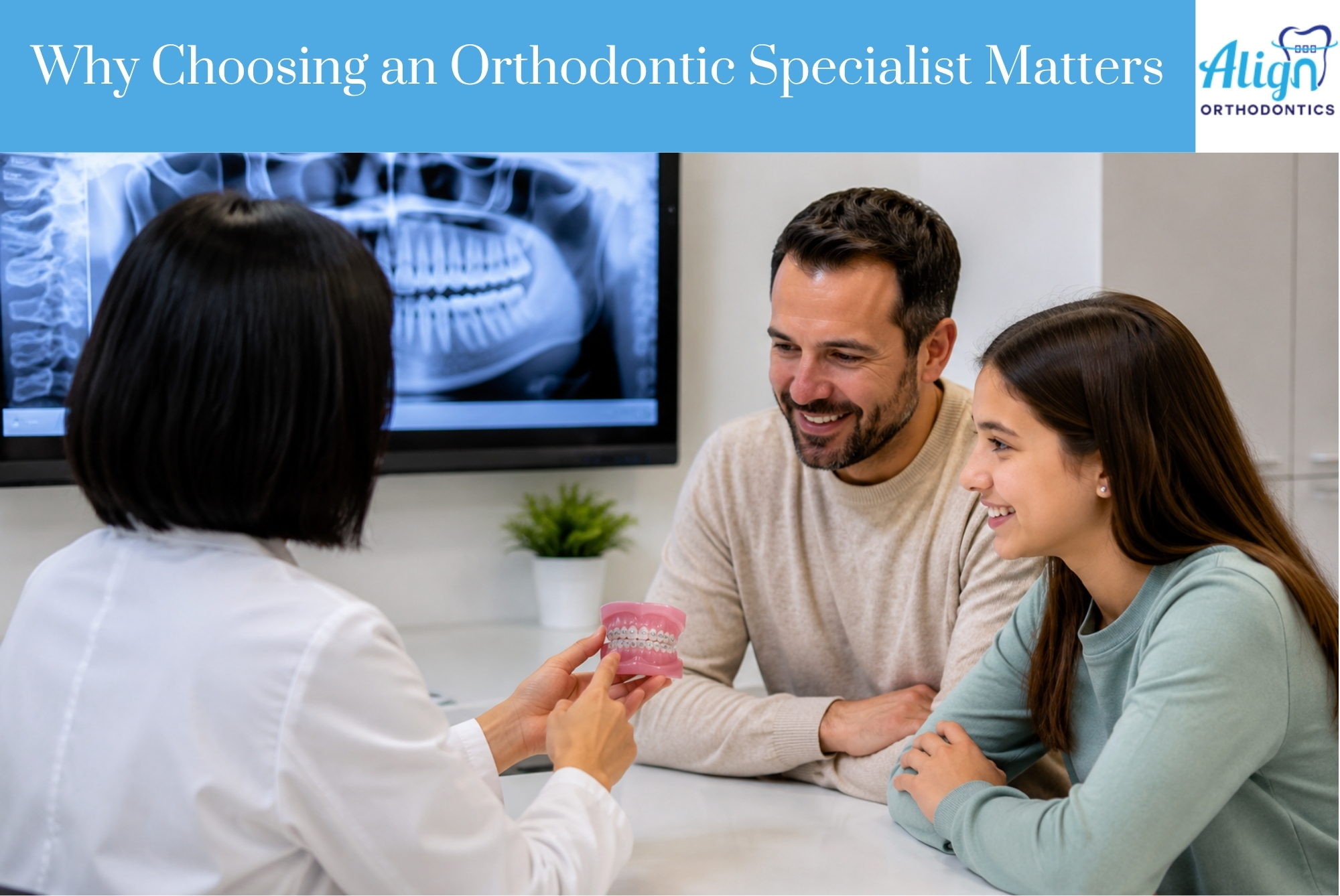
Choosing the right provider for orthodontic care is an important decision that can influence not only the appearance of your smile but also your bite, oral function, and long-term dental health. While many dental professionals provide valuable oral healthcare services, orthodontic specialists complete additional education and clinical training focused specifically on diagnosing and treating problems involving tooth alignment, jaw relationships, and bite function.
At Align Orthodontics Lexington, patients in Lexington, Massachusetts, and surrounding communities can receive orthodontic care focused on creating healthy, functional, and confident smiles. Whether you are considering braces for your child, exploring orthodontic treatment as an adult, or seeking an evaluation for a bite or alignment concern, understanding the role of an orthodontic specialist can help you make a more informed healthcare decision.
What Is an Orthodontic Specialist?
An orthodontist is a dentist who completes additional specialty education focused on orthodontics and dentofacial orthopedics after dental school. This advanced training concentrates on the diagnosis, prevention, and treatment of dental and facial irregularities.
Orthodontic specialists evaluate how the teeth, jaws, bite, and facial structures work together. Their expertise allows them to develop treatment plans for conditions ranging from relatively straightforward tooth crowding or spacing to more complex bite and jaw alignment concerns.
Because orthodontics is their specialty, orthodontists devote their professional practice to evaluating and correcting tooth and bite alignment.
How Is an Orthodontist Different From a General Dentist?
General dentists play an essential role in maintaining oral health. They commonly provide preventive care, examinations, cleanings, fillings, crowns, restorative procedures, and other dental services.
Orthodontists begin their careers as dentists but pursue additional specialty training in orthodontics. Their clinical focus is on the movement and alignment of teeth and the relationship between the teeth and jaws.
The distinction does not mean one provider is more important than another. General dentistry and orthodontics serve different but complementary purposes. In many cases, patients benefit when their dentist and orthodontist work together throughout orthodontic treatment.
Why Specialized Orthodontic Training Matters
Moving teeth involves more than making a smile appear straighter. Orthodontic treatment applies controlled forces to teeth and their supporting structures over time. Treatment planning must account for factors such as tooth position, root position, available space, bite relationships, jaw development, periodontal health, and individual treatment goals.
Specialty orthodontic education prepares orthodontists to assess these interconnected factors and determine an appropriate treatment strategy.
This expertise can be particularly important when treating complicated bite problems, significant crowding, impacted teeth, unusual eruption patterns, jaw growth concerns, or cases requiring coordination with other dental or medical professionals.
Orthodontic Treatment Is About More Than Straight Teeth
A straighter smile is one of the most visible results of orthodontic treatment, but appearance is only part of the goal.
Orthodontic care may address crowding, excessive spacing, protruding teeth, crossbites, overbites, underbites, open bites, and other alignment concerns. Depending on the individual patient, correcting these conditions may improve bite relationships and make certain areas of the mouth easier to clean.
A properly planned treatment approach considers both smile aesthetics and oral function rather than focusing solely on how the front teeth look.
The Importance of an Accurate Orthodontic Diagnosis
Successful orthodontic care begins with a detailed diagnosis.
Two patients may appear to have similar crooked teeth but have very different underlying causes. One patient may have insufficient space in the dental arches, while another may have a jaw relationship contributing to the visible misalignment.
An orthodontic specialist evaluates the entire situation before recommending treatment. Depending on the patient’s needs, this assessment may include a clinical examination and appropriate diagnostic records or imaging.
The information gathered helps the orthodontist determine what needs correction, which treatment options may be appropriate, and how treatment should progress.
Personalized Orthodontic Treatment Planning
There is no single orthodontic treatment that is ideal for every patient.
Age, tooth position, jaw relationships, oral health, growth, treatment complexity, lifestyle, and personal preferences can all influence treatment recommendations. An orthodontic specialist considers these variables when developing an individualized treatment plan.
Rather than selecting treatment based only on convenience or appearance, patients can discuss the advantages, limitations, responsibilities, and expected treatment process associated with the options appropriate for their particular case.
Why Orthodontic Expertise Matters for Children
Children can benefit from orthodontic evaluation because their teeth and jaws are still developing. Certain orthodontic concerns may become apparent before all permanent teeth have erupted.
An orthodontist can evaluate dental development, tooth eruption, available space, and jaw growth to determine whether treatment is currently appropriate or whether observation is the better approach.
Importantly, an orthodontic evaluation does not automatically mean a child needs immediate treatment. In some situations, monitoring development until the appropriate time can be an important part of orthodontic care.
Why Orthodontic Expertise Matters for Teenagers
The teenage years are a common time for comprehensive orthodontic treatment because many permanent teeth have erupted while facial and jaw development may still be occurring.
Teenagers may need treatment for crowding, spacing, bite discrepancies, rotated teeth, or other alignment concerns. Orthodontic specialists can evaluate both current tooth positions and the broader bite relationship when developing treatment recommendations.
Regular orthodontic appointments also allow the treatment team to monitor progress and make adjustments as necessary.
Why Adults Should Consider an Orthodontic Specialist
Orthodontic treatment is not limited to children and teenagers. Adults may pursue orthodontic care for cosmetic reasons, functional concerns, relapse after previous treatment, or as part of a broader dental treatment plan.
Adult orthodontic cases can involve considerations that differ from those of growing patients. Existing crowns, bridges, implants, missing teeth, gum health, bone support, or planned restorative dentistry may influence treatment.
An orthodontic specialist can account for these factors and, when necessary, coordinate treatment with a patient’s general dentist or other dental specialists.
Choosing Between Braces and Other Orthodontic Treatment Options
Modern orthodontic care may provide multiple treatment approaches, depending on the patient’s diagnosis and clinical needs. Traditional braces remain an established method for controlling tooth movement, while other orthodontic appliances or aligner-based approaches may be appropriate for certain patients.
The best option is not necessarily the one that is newest or most heavily advertised. Treatment should be selected according to the patient’s orthodontic condition, treatment goals, ability to follow instructions, and the clinical judgment of the treating orthodontist.
An orthodontic consultation is an opportunity to discuss which options may be suitable for your individual needs.
The Importance of Monitoring During Orthodontic Treatment
Orthodontic care is an ongoing clinical process rather than a treatment that simply begins when an appliance is placed and ends when it is removed.
Throughout treatment, the orthodontist monitors tooth movement, bite changes, appliance function, and overall progress. Adjustments may be made based on how the teeth respond to treatment.
Patients also play an important role. Attending scheduled appointments, maintaining good oral hygiene, following appliance instructions, and wearing prescribed elastics or removable appliances as directed can influence treatment progress.
Oral Health During Orthodontic Treatment
Maintaining healthy teeth and gums is especially important during orthodontic treatment.
Brackets, wires, and other appliances can create additional areas where plaque and food debris accumulate. Patients should follow recommended brushing and flossing techniques and continue routine dental care with their general dentist.
Orthodontists and general dentists often serve complementary roles during treatment. The orthodontist manages tooth movement and bite correction, while the general dentist continues to monitor overall dental health and provide preventive and restorative care as needed.
Retention Is an Essential Part of Orthodontic Care
Completing active orthodontic treatment is a major milestone, but maintaining the results is equally important.
Teeth can shift throughout life. Retainers are commonly prescribed after active orthodontic treatment to help maintain tooth positions.
An orthodontic specialist can recommend an appropriate retention plan and provide instructions regarding retainer wear and care. Following those instructions is an important part of protecting the results achieved during treatment.
Why Experience With Bite Problems Matters
A bite problem, or malocclusion, occurs when the upper and lower teeth do not relate to one another as intended. Examples include overbites, underbites, crossbites, open bites, and other discrepancies.
Some bite concerns are primarily dental, while others may involve jaw relationships or growth patterns. The visible position of the teeth does not always reveal the complete nature of the problem.
Because orthodontic specialists are trained specifically in tooth movement and bite relationships, they can evaluate the underlying condition and recommend treatment based on the complete orthodontic diagnosis.
The Value of Treatment Timing
Timing can influence orthodontic treatment, particularly for growing children and teenagers.
Certain conditions may benefit from evaluation during growth, while other concerns can appropriately be treated later. Starting too early when treatment is unnecessary may not provide an advantage, while waiting too long in particular circumstances can change the available treatment options.
An orthodontic specialist can evaluate development and recommend whether treatment should begin, be delayed, or simply be monitored.
Coordinating Orthodontics With Other Dental Care
Some orthodontic cases require collaboration among multiple dental professionals.
For example, adults preparing for implants or restorative dentistry may need teeth moved into specific positions before another procedure is completed. Other patients may need periodontal, oral surgical, or restorative care coordinated with orthodontic treatment.
An orthodontic specialist can communicate with other members of a patient’s dental team so that orthodontic movement supports the broader treatment plan.
Choosing an Orthodontist in Lexington, MA
When searching for orthodontic care in Lexington, Massachusetts, consider more than convenience alone. Patients and parents may want to ask about the orthodontist’s specialty training, diagnostic approach, recommended treatment, anticipated responsibilities, retention plan, and how progress will be monitored.
A consultation also provides an opportunity to ask questions and understand why a particular treatment approach is being recommended.
Align Orthodontics Lexington provides a local option for individuals and families seeking orthodontic care in Lexington and the surrounding area.
Questions to Ask During an Orthodontic Consultation
Being prepared with questions can help you better understand your diagnosis and treatment recommendations. Useful questions include:
What orthodontic problems do you see?
Why do you recommend treatment?
Is treatment needed now, or can the condition be monitored?
What treatment options are appropriate for this case?
What are the advantages and limitations of each option?
Approximately how long could treatment take?
How often will orthodontic appointments be needed?
What will I or my child need to do during treatment?
How should oral hygiene be maintained?
What happens after active orthodontic treatment is completed?
What type of retainer may be needed?
The answers should help you understand not only what treatment is recommended but also the reasoning behind the recommendation.
Frequently Asked Questions About Choosing an Orthodontic Specialist
What does an orthodontic specialist do?
An orthodontic specialist diagnoses and treats problems involving tooth alignment, bite relationships, and related dental and facial structures. Orthodontists complete additional specialty education after dental school that focuses specifically on orthodontics and dentofacial orthopedics.
Is an orthodontist a dentist?
Yes. Orthodontists first complete dental education and then pursue additional specialty training in orthodontics.
Why should I see an orthodontist for braces?
Orthodontists have specialty training focused on diagnosing alignment and bite problems and planning controlled tooth movement. Braces are orthodontic appliances, so an orthodontist’s education and clinical practice are specifically centered on this type of treatment.
Can a general dentist and an orthodontist work together?
Yes. In fact, continuing routine dental visits during orthodontic treatment is important. Your general dentist manages overall dental health and preventive care, while your orthodontist manages orthodontic tooth movement and bite correction.
At what age should a child see an orthodontist?
Children can receive an orthodontic evaluation while their teeth and jaws are developing. An evaluation does not necessarily mean treatment will begin immediately. The orthodontist may recommend treatment, continued observation, or a future reassessment based on the child’s individual development.
Does every child need early orthodontic treatment?
No. Early treatment is appropriate only for certain orthodontic conditions. Some children benefit more from monitoring until additional permanent teeth erupt or growth progresses.
Can adults receive orthodontic treatment?
Yes. Adults can pursue orthodontic treatment for tooth alignment, bite concerns, relapse after previous orthodontics, cosmetic goals, or as part of coordinated restorative dental care. The appropriate approach depends on the individual’s oral health and orthodontic diagnosis.
Am I too old for orthodontic treatment?
Age alone does not necessarily prevent orthodontic treatment. Factors such as periodontal health, bone support, existing dental work, missing teeth, and the nature of the orthodontic problem are important considerations for adult patients.
Are braces only used to improve appearance?
No. Although improving smile aesthetics is a common goal, braces and other orthodontic treatments may also address crowding, spacing, and bite relationships.
What is malocclusion?
Malocclusion is a term describing an improper relationship or alignment of the teeth and bite. Examples can include overbite, underbite, crossbite, open bite, crowding, and other alignment discrepancies.
How does an orthodontist determine which treatment is appropriate?
The orthodontist evaluates the patient’s teeth, bite, jaw relationships, dental development, oral health, and treatment goals. Diagnostic records may also be used when clinically appropriate. Treatment recommendations are then developed based on the individual’s diagnosis.
Are clear aligners appropriate for everyone?
Not necessarily. The suitability of an aligner-based approach depends on the orthodontic problem, desired tooth movements, patient cooperation, and other clinical factors. An orthodontic evaluation can determine which treatment approaches may be appropriate.
How long does orthodontic treatment take?
Treatment length varies considerably. The complexity of the orthodontic problem, treatment goals, biological response to tooth movement, appliance selection, appointment attendance, and patient cooperation can all influence treatment time. An orthodontist can provide a more individualized estimate after an examination.
How often will I need orthodontic appointments?
Appointment frequency depends on the treatment plan and appliance being used. Your orthodontic team will establish a schedule based on your individual needs and treatment progress.
Do I still need to visit my regular dentist while wearing braces?
Yes. Routine dental care remains important during orthodontic treatment. Patients should continue seeing their general dentist as recommended for examinations, cleanings, preventive care, and treatment of dental problems.
Is brushing and flossing more important with braces?
Good oral hygiene is particularly important with orthodontic appliances because food and plaque can accumulate around brackets, wires, and other components. Patients should carefully follow their orthodontist’s and dentist’s hygiene recommendations throughout treatment.
What happens after braces or other orthodontic treatment?
After active tooth movement is complete, patients typically enter the retention phase. Retainers help maintain the corrected tooth positions. Your orthodontist will recommend a retention plan based on your individual situation.
Why do teeth move after orthodontic treatment?
Teeth naturally remain capable of shifting throughout life. Changes in supporting tissues, aging, growth, and other biological factors may contribute to movement. This is why long-term retention is an important part of maintaining orthodontic results.
Should I get a second opinion about orthodontic treatment?
Patients can seek a second professional opinion when they have questions about a diagnosis or recommended treatment. Understanding your treatment options and feeling comfortable with your care plan can help you make an informed decision.
How do I choose an orthodontist near Lexington, MA?
Consider the provider’s orthodontic specialty training, approach to diagnosis, treatment options, communication, monitoring process, retention planning, office accessibility, and your comfort with the practice. A consultation can help you determine whether a particular orthodontic office is a good fit.
Where can I schedule an orthodontic appointment in Lexington, Massachusetts?
Patients interested in orthodontic care can contact Align Orthodontics Lexington at (781) 860-7997 or use the practice’s online appointment scheduling system.
Contact Information
Align Orthodontics Lexington
57 Bedford St #120
Lexington, MA 02420
Phone: (781) 860-7997
Website: orthodonticslexington.com
Appointments: Schedule an Appointment